Report Analyzes 2,200 Police Regulations Across America's Largest Cities
Across America's 18,000 police departments, significant changes have been taking place in the policies that govern when and how officers can use force. But until now, no comprehensive analysis has captured the full scope of these changes—or revealed where reform efforts have stalled.
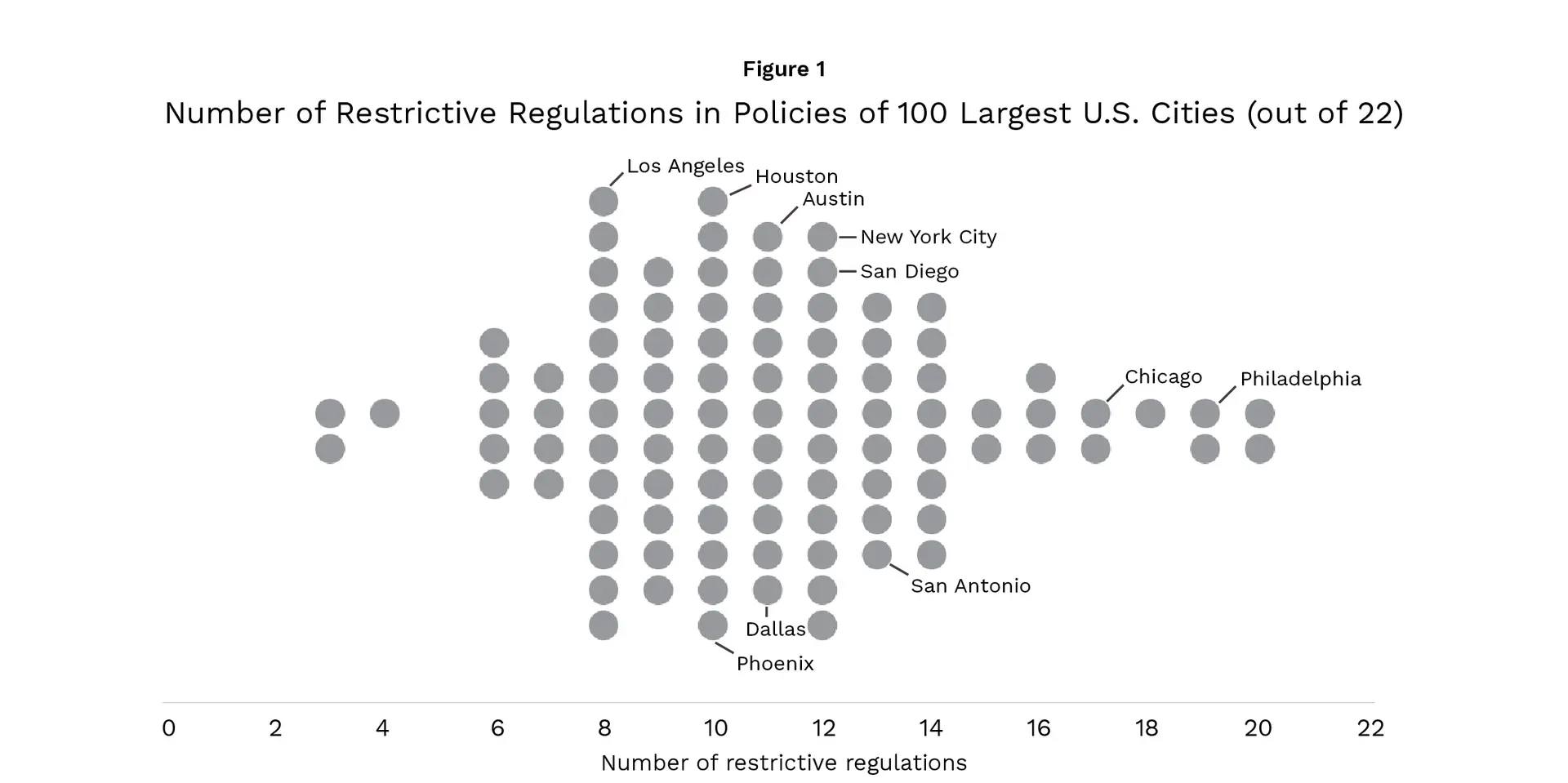
Our recently released research report, Police Use of Force Policies Across America, represents the largest systematic analysis of American force regulations to date. We examined 22 distinct policy dimensions across 2,200 total regulations from the nation's 100 largest cities collected through 2023, uncovering both dramatic shifts and surprising gaps in how police departments regulate force five years after George Floyd's killing.
What We Found
Five years after George Floyd's murder sparked unprecedented demands for police reform, questions persist about the changes that have—and haven't—been made to American policing. Many Americans may be surprised to learn that policing rules vary significantly across jurisdictions, with stark differences in how officers are permitted to use force. One city may require officers to try de-escalating a traffic stop before using any force, while another city may permit officers to immediately draw their weapons without attempting alternatives.
The post-Floyd reform movement has produced a complex landscape of change: departments have largely converged on reforms like chokehold bans and requiring officers to intervene against excessive force, but they remain deeply divided on fundamental questions of when and how force should be used. This research was motivated by the troubling and well-documented relationship between race and police violence and the ongoing need to address systemic issues at the intersection of race, policy, and use of force.
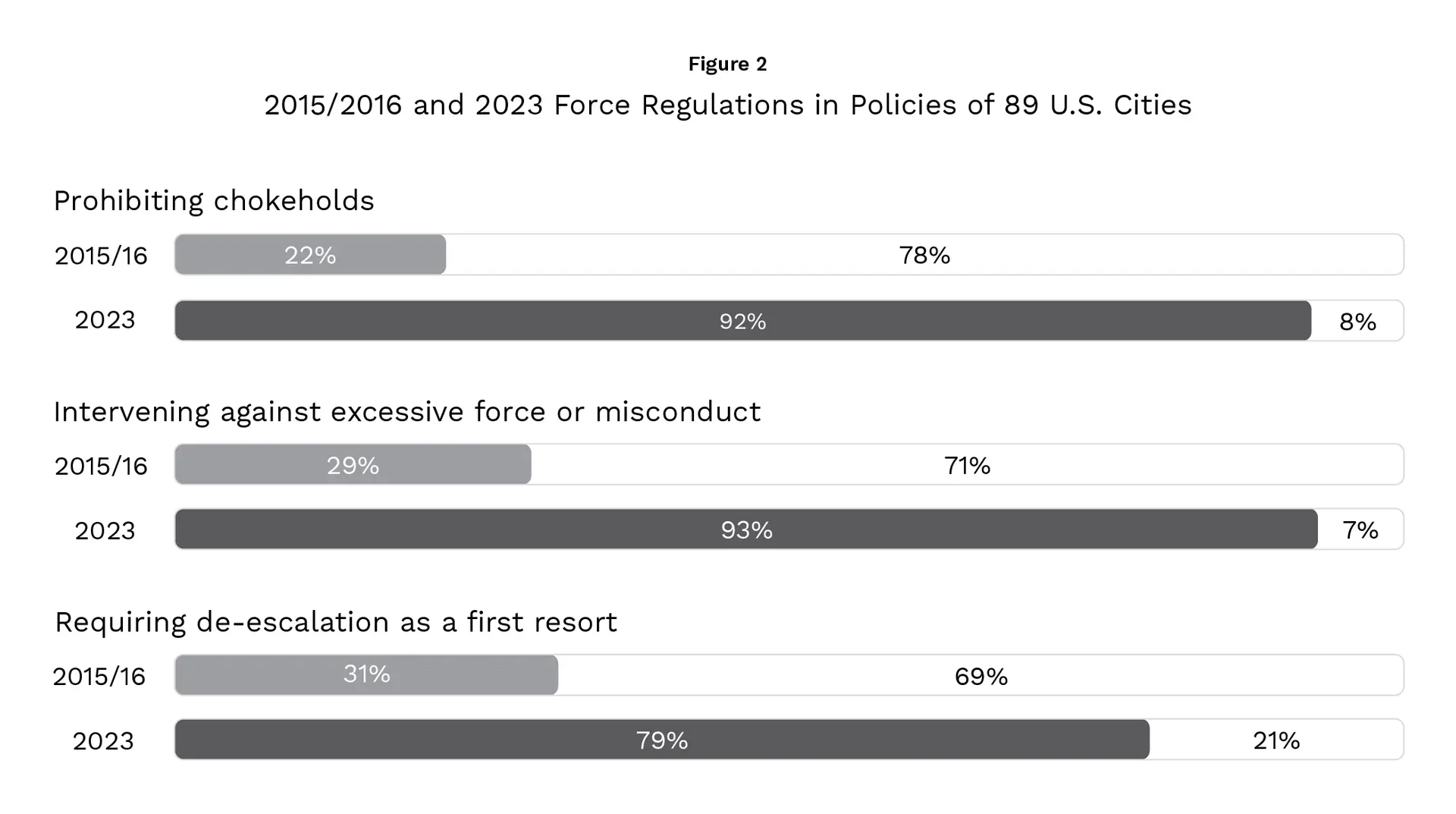
Since 2020, forty-five states have enacted reform-oriented policing laws, with at least thirty-one states specifically passing new legislation addressing use of force. Sustained public activism and federal oversight of policing during the Obama and Biden administrations have reinforced this reform movement. The percentage of departments prohibiting chokeholds has surged from 22% to 92% since 2015-2016, while departments with duties to intervene against excessive force have more than tripled from 29% to 93%. See Figure 2.
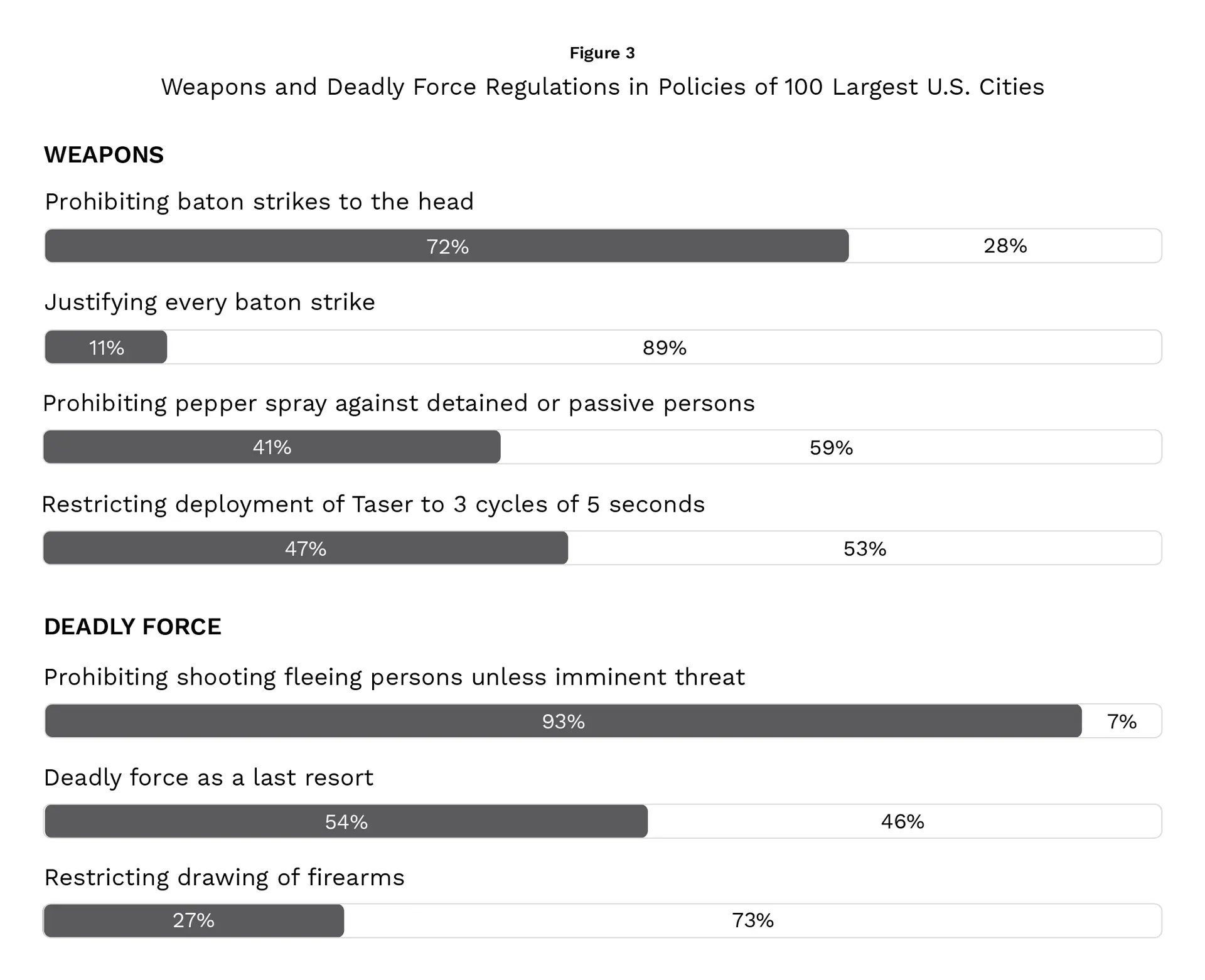
Significantly, 48% of departments have now adopted some version of a "necessary" standard for force use that sets a higher bar than the minimum constitutional "objectively reasonable" standard required by the Supreme Court in Graham v. Connor (1989), indicating departments' willingness to exceed constitutional requirements. However, major gaps persist in areas where broader consensus might be expected—only 79% of departments require attempting de-escalation before using force, just 41% restrict pepper spray use against handcuffed persons, and merely 54% designate deadly force as an option of last resort.
Why This Research Matters Now
Recently, the U.S. Department of Justice announced it would rescind findings of constitutional violations and close civil rights investigations into police conduct in Minneapolis, where Floyd was murdered, as well as Louisville (KY), Phoenix (AZ), Trenton (NJ), Memphis (TN), Mount Vernon (NY), Oklahoma City (OK), and the Louisiana State Police. The Trump administration appears poised to significantly limit federal involvement in police reform more broadly. On the campaign trail, President Trump explicitly stated his intention to "give our police their power back" and "give them immunity from prosecution," signaling a marked shift from post-2020 reform efforts.
Our research takes on particular significance in this political moment. With full Republican control of the executive and legislative branches, federal legislative initiatives to regulate police practices are effectively foreclosed for the foreseeable future. Police reform efforts will necessarily focus on state and local jurisdictions, where policymakers frequently look to policies and initiatives in other communities when developing new regulations.
To support this continuing work, we have developed an interactive database—a use of force Policy Explorer—that provides unprecedented access to comprehensive policy assessments and key regulatory language. This resource offers an unmatched level of comparative data and transparency to support evidence-based policymaking as police reform continues to evolve at the state and local level.
Download Report
Dan Sutton is Director of Justice and Safety at the Stanford Center for Racial Justice