
Physical Force, Speaking Techniques, and Chokeholds
Clear and comprehensive policies on using physical force can protect officers and community members while providing important transparency and accountability.
Introduction
Physical force: Why are policies on using it important for police and the communities they serve?
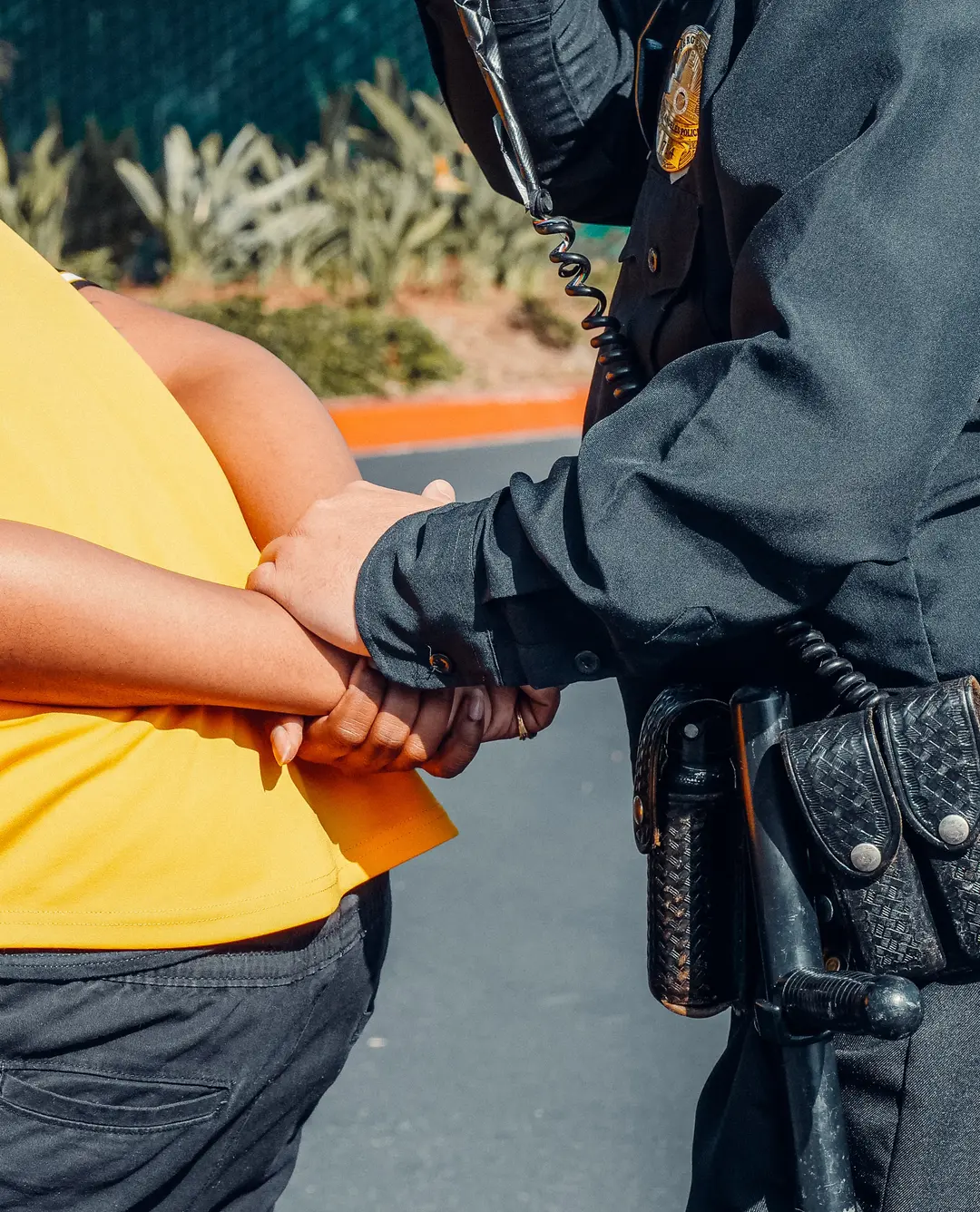
Physical force is the most common type of force police use in their jobs. This module covers a wide range of types of force—from an officer placing their hand on a person to guide them in a certain direction to an officer striking or tackling a person—and the ways the use of these types of force can impact interactions between police and the communities they serve. For an officer using physical force and the person it is used on, the use of this type of force can quickly change perceptions, attitudes, and the course of a situation.
Nearly all police officers are trained to try and resolve situations with conversations and, if necessary, commands instead of force. But our research has shown that some police department policies do not give officers much guidance on using physical force and, in some instances, do not focus on alternatives to the use of physical force nor require officers to try speaking to a person before using physical force. Clear and comprehensive policies on using physical force can protect officers and community members while providing important transparency and accountability. These policies also make clear when certain dangerous practices, like chokeholds, are prohibited.
Downloads
Policy on Physical Force
Download the model policy on Physical Force, Speaking Techniques, and Chokeholds.
Download PolicyFull Model Use of Force Policy
Download the Full Model Use of Force Policy – 10 detailed policies designed to help communities implement more effective use of force policies that enhance community safety while minimizing unnecessary force.
Open Full Model Use of Force PolicyKey things to know
- When a police officer grabs or restrains a person, that is a use of force. If the officer strikes a person with their hand or kicks a person, the officer is using a “personal body weapon.”
- Before using physical force, an officer must attempt to speak with a person, issuing a command or attempting to persuade the person to comply.
- If an attempt to speak with a person fails, an officer may next use physical restraints—like grabbing and holding the person—if the officer believes they are necessary to arrest the person or prevent likely harm.
- An officer may use strikes, kicks, or other “personal body weapons” only if attempts to speak with a person and physically restrain the person fail and if the officer believes they are necessary to prevent likely harm.
- An officer may only use the minimum amount of force necessary to lawfully do their job and must continually try to de-escalate a situation, reducing the level of force being used once the circumstances change. Chokeholds are prohibited because they are dangerous.
Understanding Policies on the Use of Physical Force
Physical force remains the most frequently used type of force by officers, deployed in situations ranging from routine traffic stops to volatile domestic disturbances. The stakes are high; officers’ decisions in these critical moments carry immediate consequences and long-term ramifications for the safety of those involved, community trust, and officers’ professional standing.
Effective physical force policies are characterized by several key elements. First, they must provide clear and comprehensive guidance, equipping officers with the nuanced direction for navigating complex scenarios. These policies should be anchored in core principles that align law enforcement practices with community values. Central to this alignment is the principle that force should be a last resort, employed only when necessary to prevent harm.
The Model Use of Force Policy exemplifies this approach by adopting a layered strategy for authorizing physical force. It prioritizes de-escalation techniques such as verbal persuasion and commands before resorting to physical interventions. Importantly, the policy’s guidance extends beyond the moment force is applied, addressing the subsequent responsibilities of officers. These include immediately providing medical aid and following a transparent reporting process.
By incorporating these elements, effective policies equip officers with the tools to navigate challenging situations while maintaining public trust and safety. They serve as a crucial framework for ensuring that the use of physical force, when unavoidable, is carried out with the utmost responsibility and accountability.
Using verbal communication before physical force
Modern policing increasingly emphasizes verbal communication as a primary tool for de-escalation and conflict resolution. The Model Policy prioritizes using physical force only as a last resort, directing officers to attempt de-escalation techniques first. These include “Speaking Techniques” such as verbal persuasion and commands. Officers should begin encounters with attempts at verbal persuasion, using a conversational or respectfully forceful tone. If unsuccessful, they should turn to clear verbal commands. It’s crucial for officers to consider potential barriers to communication, such as hearing disabilities or language differences, and distinguish between non-compliance and active refusal when attempting to de-escalate situations.
Physical Force Regulations in Policies of 100 Largest U.S. Cities

Physical controls and personal body weapons
Effective policies should clearly define physical controls and personal body weapons, emphasizing their status as reportable force. These force options should be used only when necessary to prevent imminent harm, after less forceful alternatives have failed. Policies should specify what doesn’t justify their use, such as verbal threats or hesitancy to comply. Personal body weapons, being more severe, require stronger justification. Certain techniques, like strikes to the head, neck, or spine, should be prohibited. Officers must de-escalate force as soon as the risk diminishes and avoid applying body weight to restrained individuals. Violating these guidelines constitutes excessive or unreasonable force.
Prohibition of chokeholds and breathing impairments
Chokeholds, neck restraints, and other breathing impairments have been widely controversial and increasingly prohibited in force regulations.[1] The Model Policy recommends clear language defining and restricting these techniques, categorizing them as chokeholds, strangleholds, neck restraints, and carotid artery restraints. These methods are inherently dangerous, cutting off blood and oxygen supply to the brain. [2] Effective policies explain these dangers and prohibit their use, recognizing the high risk of serious injury or death, even when applied by trained officers. [3]
Restraint techniques and already restrained individuals
As officers gain control over a person, they must consider how positioning affects breathing and blood flow. The Model Policy prohibits placing restrained individuals in prone positions or using body weight to control them after restraint [4]. This applies during transportation as well. Officers must be aware that force on various body parts, not just the head and neck, can impair breathing or blood flow. [5] The policy aims to prevent situations that compromise breathing for further restraint, emphasizing the need to move individuals out of prone positions as soon as safely possible.
Training, medical aid, and reporting
Comprehensive policies should specify that officers can only use physical controls or personal body weapons after completing department-approved training, with regular retraining required. If force is used, officers must immediately assess the person's condition and provide needed medical aid. This duty applies to all uses of force, not just excessive ones. Consistent reporting on force use promotes accountability and transparency. Policies should require detailed reporting on physical force incidents, including how less harmful methods proved ineffective. Well-designed reporting policies can encourage reliance on verbal persuasion and commands, building community trust in law enforcement.
The Policy
1.1 – Key Concepts and Definitions
A. Key Concepts:
- This Department’s policy is that force—including physical force—may be used only as a last resort after all available non-force options have been exhausted.
B. Definitions:
-
Available Information: The information that was obtainable or accessible to an officer at the time of the officer’s decision to use force. When an officer takes actions that hasten the need for force, the officer limits their ability to gather information that can lead to more accurate risk assessments, the consideration of a range of appropriate tactical options, and actions that can minimize or avoid the use of force altogether.
-
De-Escalation: Taking action or communicating verbally or nonverbally during a potential force encounter in an attempt to stabilize the situation and reduce the immediacy of the threat so that more time, options, and resources can be called upon to resolve the situation without the use of force or with a reduction in the level of force necessary.
-
Lawful Objective: Limited to one or more of the following objectives:
a) Conducting a lawful search;
b) Preventing serious damage to property;
c) Effecting a lawful arrest or detention;
d) Gaining control of a combative individual;
e) Preventing and/or terminating the commission of a crime;
f) Intervening in a suicide or self-inflicted injury; and/or
g) Defending an officer or another person from the physical acts of another.
-
Necessary: Force qualifies as necessary when an officer has exhausted available non-force options or less-forceful options to achieve their lawful objective.
-
Personal Body Weapons: An officer’s use of their body parts, including but not limited to their hand, foot, knee, elbow, shoulder, hip, arm, leg, or head by means of kinetic energy transfers (impacts) to gain control of a person. Personal Body Weapons include, but are not limited to, palm heel strikes, common fist strikes, bottom fist strikes, elbow strikes, knee strikes, front kicks, side kicks, roundhouse kicks, leg sweeps, hip throws, front leg wraps, and front and rear takedowns. Personal Body Weapons are Reportable Force under this policy.
-
Physical Controls: An officer’s use of their arms and/or legs to physically apprehend, restrain, immobilize, restrict, or otherwise subject an individual to an officer’s physical control. Physical Controls include, but are not limited to, empty hand controls such as wrist locks, twist locks, finger flexes, arm bars and escort positions; the application of force to pressure points; the application of an officer’s body weight; and pain compliance techniques. Physical Controls are Reportable Force under this policy.
-
Reportable Force: A use of force that must be reported to the Department.
-
Resistance: Officers may face the following types of resistance to their lawful commands:
Passive Resistance: A person does not attack or attempt to attack the officer or another person, and does not attempt to flee, but fails to comply with the officer’s commands. Examples include, but may not be limited to, going limp, standing stationary and not moving following a lawful command, and/or verbally signaling their intent to avoid or prevent being taken into custody.
Active Resistance: A person moves to avoid detention or arrest but does not attack or attempt to attack the officer or another person. Examples include, but may not be limited to, attempts to leave the scene, fleeing, hiding from detection, physical resistance to being handcuffed, or pulling away from the officer’s grasp. Verbal statements, bracing, or tensing alone do not constitute Active Resistance. A person’s reaction to pain caused by an officer or purely defensive reactions to force does not constitute Active Resistance.
-
Totality of Circumstances: The totality of the circumstances consists of all facts and circumstances surrounding any event.
-
Verbal Command: A method of control that includes instruction or direction from an officer to an individual in the form of a verbal statement or command. The statement instructs a person to engage in or refrain from a specific action or non-action (e.g., “Put your hands behind your back”).
-
Verbal Persuasion: A method of communication to persuade, as opposed to command, a person to refrain from a specific action or non-action and to persuade a person to voluntarily
1.2 – Requirement to Attempt to Use Speaking Techniques
A. Verbal Persuasion as a tool of first resort
If Verbal Persuasion is available to an officer, the officer must attempt to use Verbal Persuasion to gain compliance or reduce a threat before any use of force, including Physical Controls and Personal Body Weapons.
B. Verbal Command as a force de-escalation technique:
- If an officer is able to issue a Verbal Command, the officer must also attempt to issue the Verbal Command to attempt to gain compliance or reduce a threat before using physical force, including Physical Controls and Personal Body Weapons.
- The volume and tone of the officer’s speech impacts the effectiveness of Verbal Persuasion and Verbal Commands. Officers must refrain from using profanity, making disrespectful or inappropriate comments, or being argumentative when dealing with the public. Officers should attempt to use a conversational tone, however, this does not prohibit an officer from using forceful, yet respectful, speech.
- An individual’s non-compliance with a Verbal Command is not the same as a person’s active refusal to obey a Verbal Command. Before using physical force, the officer should consider the totality of the circumstances and whether there are factors that might affect a person’s ability to comply with the Verbal Command. Such factors to consider include hearing disabilities, cognitive impairment, or language barriers.
1.3 – Authorization and Standard for Physical Controls and Personal Body Weapons
A. Authorization for Physical Controls
Physical Controls are authorized only when there is a Lawful Objective, the officer has exhausted all available non-force options, the officer has attempted to use Verbal Persuasion and Verbal Commands, and the use of Physical Controls is necessary to carry out the Lawful Objective and proportional to the totality of the circumstances.
- Mere verbal threats of violence, verbal abuse, or hesitation by a person in following commands do not by themselves justify the use of Physical Controls without additional facts and circumstances satisfying the standard for using force.
- Exception to first using Verbal Persuasion and Verbal Commands. The only exception to this precondition is if the officer believes that the use of Physical Controls is necessary to prevent imminent bodily harm to the officer, the individual, or another person and that belief is consistent with Available Information.
B. Authorization for Personal Body Weapons
If Verbal Commands and Physical Controls do not gain control of a person and the person’s physical actions become Active Resistance to the point that they prevent an officer from making an arrest or pose a substantial risk of causing imminent bodily harm, the officer may use Personal Body Weapons against the person, but only to the extent necessary to carry out a Lawful Objective. The only exception to first using Verbal Commands and Physical Controls is if the officer believes that the use of Personal Body Weapons is necessary to prevent imminent bodily harm, that belief is consistent with Available Information, and the officer is unable to use Physical Controls to accomplish the same objective.
C. Standard for Using Physical Controls and Personal Body Weapons
Any use of Physical Controls or Personal Body Weapons must be limited to the minimum amount of force the officer believes is feasible to carry out a Lawful Objective, consistent with Available Information, and must be proportional to the totality of the circumstances. Officers must stop using Physical Controls or Personal Body Weapons as soon as possible after the conditions justifying the use of such force have changed.
D. Prohibited Uses of Personal Body Weapons
Strikes, punches, or kicks to the rear of the head, neck or spine are prohibited. The only exception to this prohibition is when the use of deadly force is authorized under this Policy.
1.4 Requirement to De-Escalate Physical Force:
Officers must de-escalate their use of force as soon as a resisting individual’s behavior no longer justifies the level of force being used.
Example. Where the use of Personal Body Weapons was justified under this policy because of an imminent threat of bodily harm to the officer, but the person subsequently changes their behavior such that the person no longer poses an imminent threat of bodily harm, the use of Personal Body Weapons is no longer justified absent additional facts or circumstances indicating an elevated threat level, and the officer should stop the use of Personal Body Weapons.
1.5 – Chokeholds, Strangleholds, Neck Restraints, Carotid Artery Restraints, and Other Breathing Impairments are Prohibited Physical Force
A. Chokeholds, strangleholds, neck restraints, and carotid artery restraints are prohibited physical force
These techniques cut off the supply of blood and oxygen to the brain and are dangerous to human life. They are prohibited even in incidents where an individual attempts to ingest or is suspected to have ingested narcotics or other evidence.:
- Chokehold: a technique that involves encircling the neck of a person, applying pressure primarily to the front of the neck. A chokehold aims to restrict the person’s airflow by compressing the windpipe.
- Stranglehold: a technique that involves applying pressure around a person’s neck. A stranglehold aims to restrict either the person’s airflow by compressing the windpipe or the person’s blood flow by compressing the carotid arteries.
- Neck restraint: any technique that involves the use of a limb or a firm object to apply pressure to a person’s neck area. A neck restraint aims to control or disable the person by applying this pressure.
- Carotid artery restraint: a specific technique that involves applying lateral pressure to the sides of a person’s neck, targeting the carotid arteries. A carotid restraint aims to restrict blood flow to the person’s brain, which can induce unconsciousness.
B. Breathing Impairments
All breathing impairments that apply sufficient pressure to a person’s body in a manner that intentionally makes breathing difficult or impossible are prohibited physical force.
- Strikes to the neck: Officers may not use a forceful strike to a person’s neck, such as a vagus strike. Nerves in the neck regulate an individual’s heartbeat and breathing. Strikes to the neck can cut off the supply of blood and oxygen to the brain and are inherently dangerous.
- Application of Body Weight to the Back, Head or Abdomen. If an officer’s body weight is used in an attempt to control a person who is resisting, the officer must immediately cease applying their body weight to the person’s back, head, or abdomen once the person is restrained. As soon as possible after a person has been handcuffed and the person’s actions no longer place officers at risk of imminent bodily harm, the person should be turned onto their side or allowed to sit up. Officers must ensure that the person is not left in a prone position because this face-down position risks positional asphyxia, which occurs when the position of the person’s body interferes with their ability to breathe.
1.6 – Duty to Provide Medical Aid
A. Requirement to Provide Medical Aid
Following any use of physical force, the officer using force or other officers present at the scene must immediately summon EMS and immediately provide medical aid, to the best of their skill and training, to any person that is:
- Injured;
- Claiming injury;
- Requesting medical attention;
- Exhibiting physical or mental distress; or
- Having difficulty breathing.
B. Duration of Duty to Provide Medical Aid
The duty to provide medical aid continues until any injured individuals are either in stable condition or in the care of trained emergency medical professionals. Officers must continuously monitor a person’s condition and provide ongoing updates to EMS on the person’s condition.
1.7 – Reporting and Training Requirements for Physical Force
A. Reporting Requirements
- Verbal Persuasion or Verbal Commands that comply with this policy are not Reportable Force. Improperly issued Verbal Commands—whether reported by an issuing officer, witnessing officer, the individual receiving the command, or a bystander—should be reviewed by a supervisor.
- Physical Controls and Personal Body Weapons are Reportable Force. When reporting a use of physical force, an officer must include in their report why non-force techniques or lesser force techniques did not work or would not have worked under the circumstances.
B. Training Requirements
Officers must complete annual training on the use of Verbal Persuasion, Verbal Commands, Physical Controls, and Personal Body Weapons. No officer may use Physical Controls or Personal Body Weapons without having first successfully completed Department-approved training on these physical force techniques.
Endnotes
- Kimberly Kindy, et al., "Half of the nation’s largest police departments have banned or limited neck restraints since June," Washington Post (last updated Sept. 6, 2020).
- See, e.g., Paul Butler, Chokehold: Policing Black Men 3 (2017) (“The truth is any human being will suffer distress when pressure on the carotid arteries interrupts the supply of blood from the heart to the brain.”); E.K. Koiwai, Deaths Allegedly Caused by the Use of “Choke Holds” (shime-waza), 32 Journal of Forensic Science 419, 426–28 (1987). Jamie R. Mitchell, et al., Mechanism of Loss of Consciousness During Vascular Neck Restraint, 112 Journal of Applied Physiology 396, 396 (2012); Gael Strack, et al., A Review of 300 Attempted Strangulation Cases. Part I: Criminal Legal Issues, Journal of Emergency Medicine. 303–09 (2001).
- Emily Siegel, et al. "Minneapolis police rendered 44 people unconscious with neck restraints in five years," NBC News (June 1, 2020).
- Lawrence E. Heiskell, "How to Prevent Positional Asphyxia," Police Magazine (Sept. 9, 2019).
- A.J. Lagoe, et al., "Use of force experts question officer’s actions," Kare News, (May 27, 2020).